
West Springfield Previous Residents by Era
Previous residents leave different kinds of evidence at different times. Fairfax land records tie a parcel to a recorded transaction, while community directories and the federal census can place a household at an address on a particular date. Begin with the era that matters. A recent ownership question starts with the parcel and deed route. A mid-century household question often starts with a dated directory. Older work may require the Historic Records Center, microfilm, or a newspaper index after an online name search reaches its limit.
| Source | Years it covers | Where held | What it shows |
|---|---|---|---|
| Circuit land-record images | 1742 to present | CPAN, research room, or HRC | Deeds, trusts, liens, plats, and the legal trail for a parcel |
| Fairfax land index | Generally 1980 to present; book-image indexes for 1742 to 1979 | CPAN and HRC | Grantor, grantee, instrument, book, and page paths |
| Westmore street directories | 1961, 1975, 1981, 1989, 1991 | Fairfax Virginia Room | Listed telephone and street-address snapshots |
| West Springfield Civic directories | 1964 to 2001, with gaps | Fairfax Virginia Room | Community-listed household and street snapshots |
| Federal census | Released through 1940 | National Archives and library databases | Historical household structure and residence evidence |
| PLUS and LDIH records | PLUS after the 2022 migration; legacy material before it | County public systems or custodian follow-up | Construction, inspection, and address-linked change clues |
A title trail identifies past owners, not every past resident. A directory can identify a listed household, not necessarily every person in it. Keeping those roles separate is essential when asking who lived here before.
Note: Record the source date beside every name so a current parcel fact is never mistaken for an earlier household fact.
West Springfield Previous Residents: Parcel Clues
For a West Springfield address, Fairfax iCare is the practical starting point for a situs address, map number, assessment details, sale information, and an owner field when it is shown. Its public interface is address- and map-oriented. The address form accepts number, unit, street, suffix, sort choices, and results-per-page settings. If an address is hard to match, omitting the suffix or using the map number can narrow the parcel without treating a mailing line as proof of residence.
Then confirm the parcel in Jade GIS. The map can supply parcel context, a PIN, subdivision clues, and historic aerial layers. Save the map number, situs address, mailing address, legal subdivision, and unit number together. A missing owner field can reflect DTA withholding, a trust or entity, or a situs and mailing mismatch. None supports a guess about who lives there.
West Springfield Deed Chain for Past Residents
The Fairfax deed chain runs backward from a known parcel. The current purchase deed often names the prior owner and refers to an earlier instrument. That reference is more reliable than a modern street label when older deeds use a lot, section, acreage, subdivision, or adjoining-owner description. Read each instrument before adding it to the chain. A release or deed of trust documents financing activity, for example, and is not automatically a sale.
- Find the current map number, legal description, and owner field, if public, in iCare. Confirm the same parcel in Jade.
- Use the current owner as a grantee in the Fairfax land-record index and retrieve the purchase deed by instrument number or book and page.
- Read the deed for the grantor, parcel description, plat reference, and any prior-instrument reference.
- Search that prior owner as a grantee to find the earlier purchase, then repeat the process with the legal description in view.
- When the online route breaks, move to the book-image indexes, HRC holdings, or a copy request that names the known instrument or book and page.
The Fairfax land-records route explains the county jurisdiction and grantor-grantee research path. Its public information does not expose a general CPAN grantor-grantee form, so remote access, courthouse research, and historic materials have distinct roles.
The Circuit land-records overview shows the county's deed-research route before the following record image.
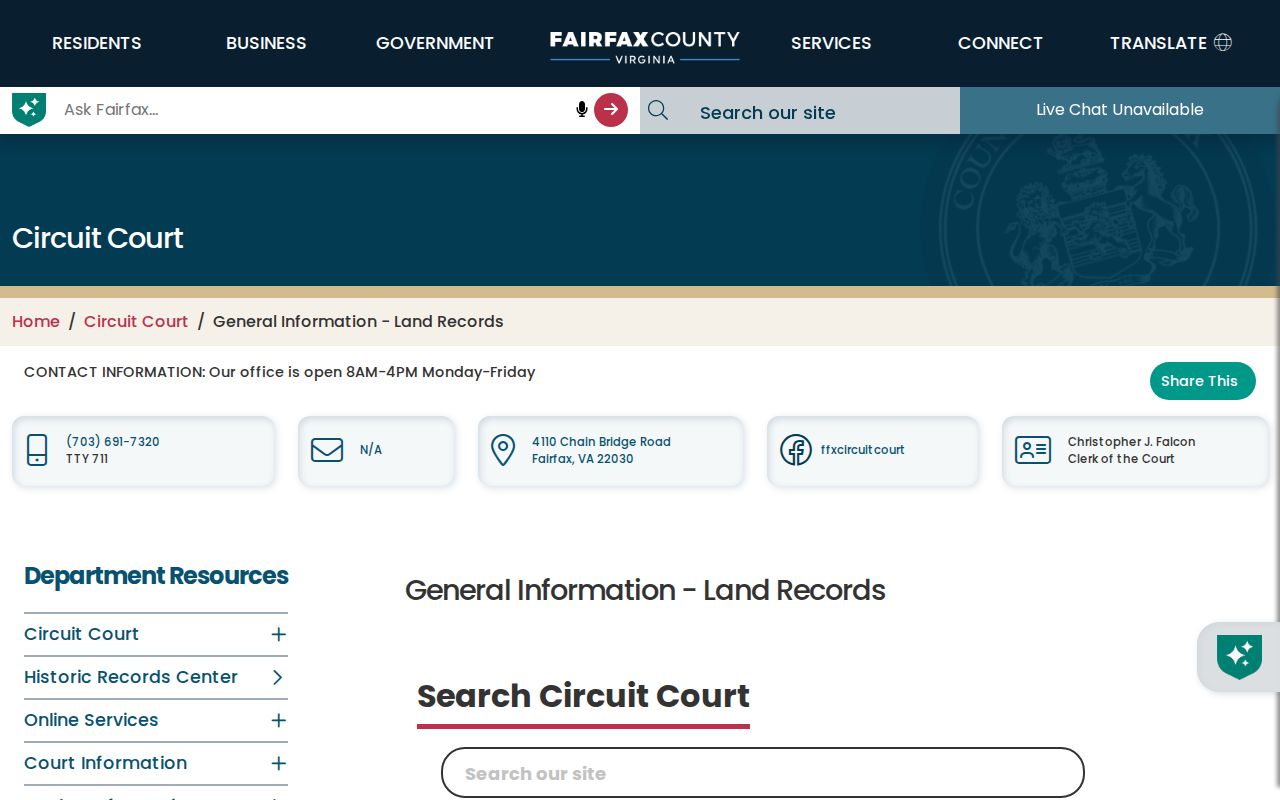
The screenshot is a reminder to preserve the instrument or book-and-page reference that carries the trail from one deed to the next.
- Grantor and grantee
- The grantor transfers an interest in the deed; the grantee receives it. In an ordinary sale, they are commonly the seller and buyer.
- Chain of title
- A dated sequence of recorded instruments that connects the same parcel through transfers and related filings.
- Legal description
- The deed-controlled language identifying lot, section, acreage, subdivision, or boundaries. It can outlast a changing street label.
- Plat
- A recorded map that can connect a subdivision lot or section to the parcel used in later records.
West Springfield Records From 1742 Forward
Fairfax land-record images are retrievable from 1742 to the present, but the way a researcher reaches them changes by era. CPAN index data is generally available from 1980 forward. Older work may require book-image indexes for 1742 to 1979, original books at the Historic Records Center, or Fairfax microfilm at the Library of Virginia. A blank modern index search does not mean the earlier deed did not exist.
The Historic Records Center is the archival recovery channel for this part of the West Springfield previous-residents trail. Its holdings include original deed books, tax books, and other county series, though some early deed books and court periods are missing. Report an absent volume or coverage gap exactly. Do not fill it with a guessed transfer or household.
Fairfax returned historic records from 1742 through the 1940s to the county in 2013. That archive history explains why a usable deed image, a searchable index, and an available public web result are not the same thing.
West Springfield House History Records
The Fairfax Virginia Room provides the local house-history layer: directories, telephone books, maps, newspapers, microform, and a designated CPAN station. Its property-history bibliography recommends comparing pre-1965 and post-1965 directories for old or new house numbers, reading deeds and wills, checking the newspaper index, and using probate when an estate appears in the trail. It also points to the Lusk/TRW REDI Fairfax real-estate sales directory for 1953 to 1995.
West Springfield's postwar development makes this source especially useful. Where a parcel lies in West Springfield Village, Richmar's 1966 development history can help organize a comparison among the earliest deed or plat, a permit, the first directory listing, and a later civic directory. Those are four distinct dates, not interchangeable evidence of who lived there.
The Virginia Room property-history guide supplies the library's own workflow and search terms.
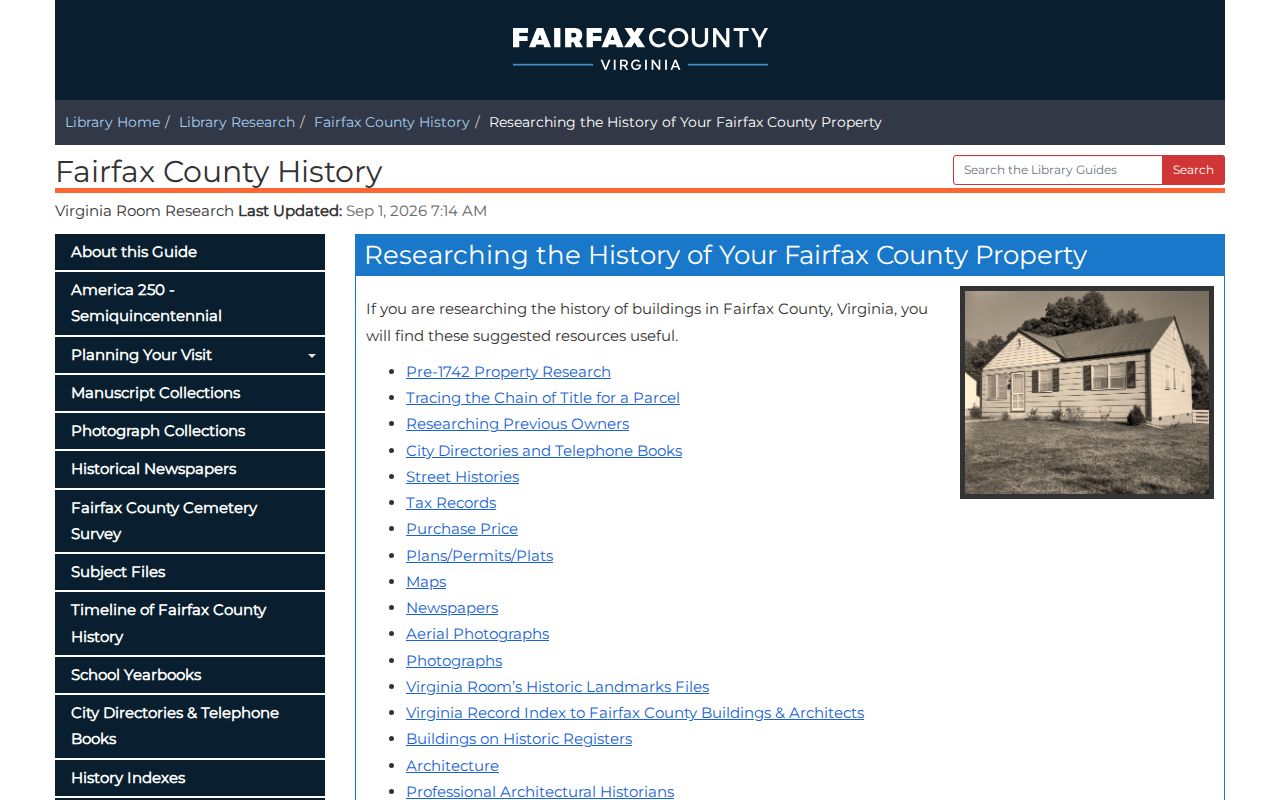
Use the bibliography as a sequence of checks, then retain the citation for each directory, deed, newspaper result, or probate lead that supports the address timeline.
West Springfield Past Households by Directory
Past households need a different trail from past owners. The Virginia Room holds Westmore street directories for 1961, 1975, 1981, 1989, and 1991; West Springfield Civic Association directories for 1964 to 1971, 1972 to 1976, and later selected years through 2001; and wider Springfield/Lorton runs. The civic volumes are historical, community-produced snapshots. Their current association directory is private, annual, and limited to members or new residents who agree to be listed.
For a directory year, record the spelling, street number, address form, and any printed notation exactly. Pair it with the closest released federal census and a deed recording date. The collection details belong with the West Springfield city directory, while an address history uses only the years that bear on the parcel.
Household flow: dated address and directory entry → closest census release → deed or plat for the parcel → historical newspaper index → probate or obituary lead where the evidence supports it.
The Fairfax Historical Newspaper Index covers selected years from 1785 to 2000 and has more than one million indexed records. Search a name or address variation, then retrieve the underlying issue because the index is a pointer, not proof of the full event.
Note: A telephone subscriber, civic-directory member, and deed holder can be different people at the same address.
West Springfield Address Records and Aerial Clues
County construction records can date a building change without proving a household. Fairfax PLUS searches building records by site address, parcel, record number, or record information. Its inspections appear under Record Info. Older building, site, zoning, and complaint material may instead be in LDIH because PLUS replaced earlier systems on October 31, 2022. A permit applicant or contractor should be described only in that role.
Jade's historic aerials extend to 1937 and can help date visible lot or building change. No West Springfield-specific Sanborn volume was located in the official Library of Congress search, so a generic fire-insurance map should not be treated as local coverage. Aerials date physical conditions, not ownership, title, or a resident.
West Springfield Previous Residents and Record Gaps
Missing records are part of a sound conclusion. Fairfax documents gaps in some early deed books, incomplete Chancery material, missing court-order periods, and historical vital-record limits. When the name trail stops, test the street form, subdivision name, lot and section, unlisted telephone number, directory gap, and mailing-versus-situs distinction before deciding the person moved. The Virginia Room, HRC tax books, Library of Virginia microfilm, and the newspaper index are the documented recovery channels.
Use the deed route directly when a solicitation promises a recorded copy at an inflated price. Fairfax states that a certified copy costs $2 per document plus $0.50 per page, and it requires an instrument number or deed book and page. Keep a property-alert message or suspicious mailing, then verify it with the custodian rather than using a payment link or a caller's number.
The Fairfax property-alert and scam notice describes deed-fraud concerns and the county's property-alert initiative.
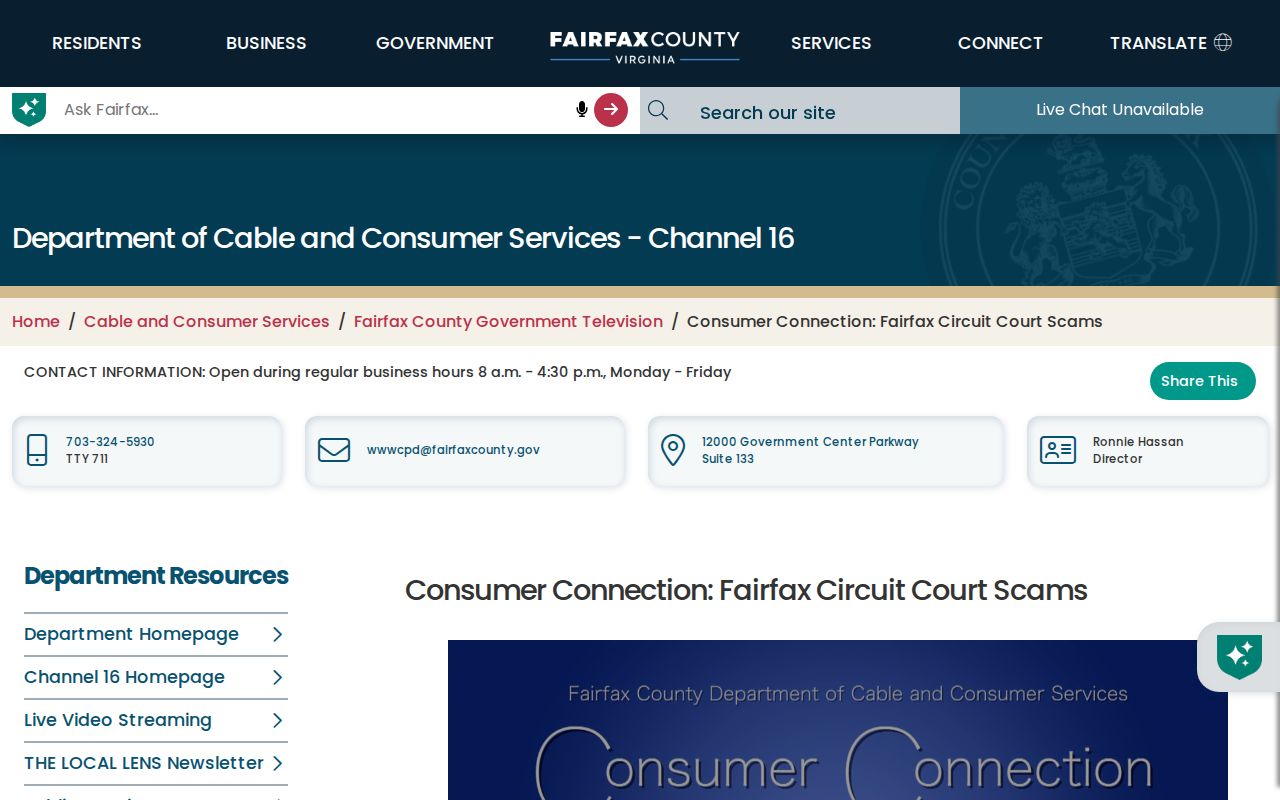
The notice reinforces a useful rule for house history: confirm an instrument through the Circuit Court record channel before acting on any offer or alert.
Lawful use. West Springfield previous-residents research is for house history, family history, estate questions, and personal curiosity. Do not use a dated record to watch, harass, or track a living person.