
West Springfield City Directory Holdings
The Fairfax Virginia Room is the primary shelf for historical West Springfield city directories. Its holdings gather the community under several labels, including Fairfax County, Springfield, Springfield/Lorton, and Westmore. That matters because West Springfield is an unincorporated Fairfax County community, not a separately incorporated city. Start by matching a known year and address to the closest title, then move backward or forward one available volume at a time. The coverage table separates local community runs from broader county and regional sources.
| Collection | Years | Where held | Access |
|---|---|---|---|
| West Springfield Civic Association Community Directory | 1964–71, 1972–76, 1978–80, 1988–90, 1995, 1997, 1999–2001 | Fairfax Virginia Room | Historical collection; current association directory is private |
| Springfield-Franconia Directory, Lions Club | 1961 | Fairfax Virginia Room | In-person local-history collection |
| Springfield Virginia Directory | 1975 | Fairfax Virginia Room | In-person local-history collection |
| Springfield/Lorton Community Directory | 1981, 1982–83, 1983–84, 1984–85, 1985–86, 1986–87, 1989, 1990–91, 1994–95 | Fairfax Virginia Room | In-person local-history collection |
| Westmore Telephone Directory and Street Map | 1961, 1975, 1981, 1989, 1991 | Fairfax Virginia Room | Street-map and telephone-directory comparison |
| Hill's Alexandria suburban/Fairfax County directory | 1966, 1968, 1969, 1971, 1972, 1973 | Fairfax Virginia Room | Springfield and Annandale coverage |
The Fairfax directory-holdings catalog supplies the full list of Fairfax, telephone, criss-cross, and community titles.
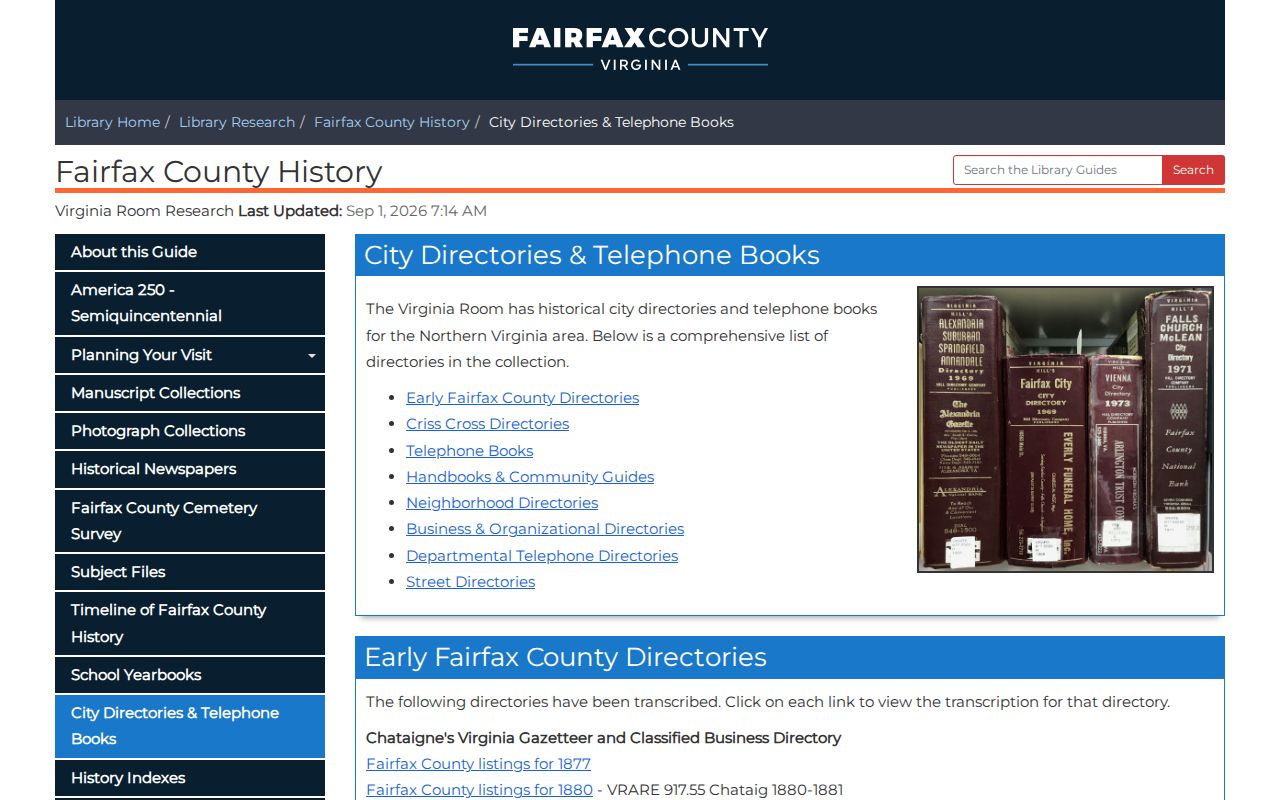
Use the title and year shown in the holdings catalog as part of every citation, since missing years and different community labels are part of the historical record.
Virginia Room West Springfield Directories
The Fairfax Virginia Room has eight Internet stations, a CPAN-designated station, a microform reader-printer that can save to USB, historical maps, photographs, manuscripts, newspapers, rare books, and genealogy sources. It links its city-directory shelf with telephone books, property-history material, yearbooks, and the Historical Newspaper Index. This makes it the practical first stop when an online search reaches only a catalog description or a partial scan.
The room is at the City of Fairfax Regional Library, 10360 North Street, Fairfax, VA 22030. Its contact number is 703-293-6227, option 6, and its email is va_room@fairfaxcounty.gov. Staff can explain collection access and equipment, but the researcher remains responsible for matching a printed entry to the right person and address. Bring the year, spelling variants, and any street form already found in a deed or old correspondence.
Open the Virginia Room resource page to confirm services before a visit.
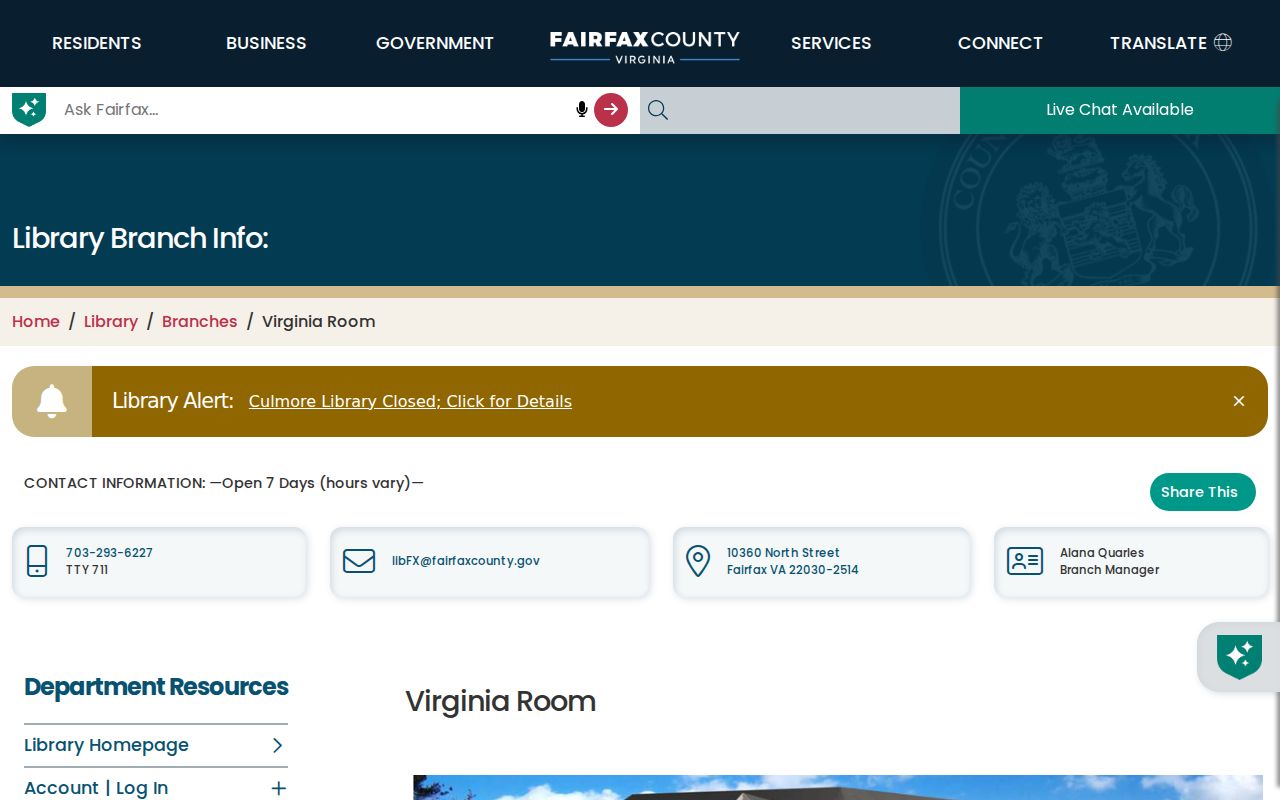
The room combines printed West Springfield volumes with microform, maps, and local reference material needed to test an entry against other sources.
West Springfield Civic Directory Runs
The Civic Association Community Directory is the most direct West Springfield city directory run located in the research. Its 1964 to 1971 volumes, followed by 1972 to 1976 and later listed years through 2001, capture the community's postwar growth as dated household and street snapshots. The 1961 Springfield-Franconia directory and the 1961 Westmore street directory provide earlier nearby comparison points. Richmar's 1966 construction date for West Springfield Village is a useful date anchor when comparing a directory, permit, and deed, but it does not fill a missing entry.
Membership limits matter. The current West Springfield Village constitution describes its annual directory as private, for members and new residents who agree to listing, arranged alphabetically and by street. A historical civic directory can document a printed listing at a time, while an absent listing may simply reflect the scope of that edition. Do not represent association material as a public current roster.
West Springfield City Directory Entries
A directory entry needs to be copied, not expanded from guesswork. The inspected 1906 Fairfax County directory index supports a name, address or post-office address, business, and printed trade or role where present. The full punctuation and abbreviation key should be checked in the scan or physical volume before any abbreviation is interpreted. For later community titles, record only fields actually printed and note whether the source is alphabetical, street-arranged, telephone-based, or a reverse directory.
| Printed name | Copy surname and given-name form exactly, including initials or spelling variants. |
|---|---|
| Address or P.O. address | Keep the house number, road form, unit detail, or postal wording as printed. |
| Spouse or widow notation | Record the notation exactly when the volume supplies it; it is a historical clue, not proof by itself. |
| Trade, role, or business line | Preserve the wording without adding a modern interpretation. |
| Source and year | Note the collection title, publication year, page, and whether the entry is name-first or street-first. |
- Criss-cross directory
- An address-first section that leads from a street and number to a listed name or telephone entry.
- Householder index
- A name-first listing centered on the household contact printed by the publisher.
- Abbreviation key
- The volume's own guide to shortened words and symbols; record it before expanding any mark.
- Index
- A finding aid that directs the reader to an entry or image, rather than a replacement for the original page.
Note: A single printed entry can show a listing, not every relationship, address change, or person connected with that property.
West Springfield Criss-Cross Limits
Address-first research is not evenly available across the Fairfax shelf. The Virginia Room does not hold the Haines Criss-Cross Northern Virginia run. Arlington Public Library's Center for Local History holds Haines directories from the early 1970s to the present that include Fairfax street addresses. Hill's suburban volumes are the local alternative for Springfield. Check the exact title and annual coverage before assuming a missing address reflects a missing household.
Start with the road name and number, test spelling and an older number form, and read the entry in the context of that issue. If the name-first search fails, reverse the direction by street and compare the next available volume. A telephone subscriber is not automatically every person at an address, and a street directory can have publication or geographic gaps. For a current address-keyed parcel trail, use the West Springfield street directory workflow instead of treating a historical volume as a current record.
West Springfield Directory Timeline
Fairfax records predate the West Springfield community. That timing explains why the oldest county directories are county or regional works rather than town volumes. It also explains why a modern community address can need several labels during a historical search. The timeline separates the printed milestones from the much older county record system.
- 1877–1897: Chataigne's Virginia Gazetteer provides Fairfax listings with early names, businesses, roles, and postal addresses.
- 1906 and 1911: Hill's Virginia Gazetteer carries Fairfax listings; the 1906 Fairfax County directory has a library index.
- 1961: Springfield-Franconia and Westmore volumes provide the earliest direct local-area directory snapshots found.
- 1964–71: West Springfield Civic Association volumes begin the direct community run.
- 1966: Richmar's West Springfield Village construction is a comparison point for parcel, permit, and directory research.
- 1999–2001: The final listed West Springfield Civic Association directory years located in the Virginia Room holdings.
The Fairfax County History Commission is the official local-history substitute found for a separate West Springfield historical-society collection.
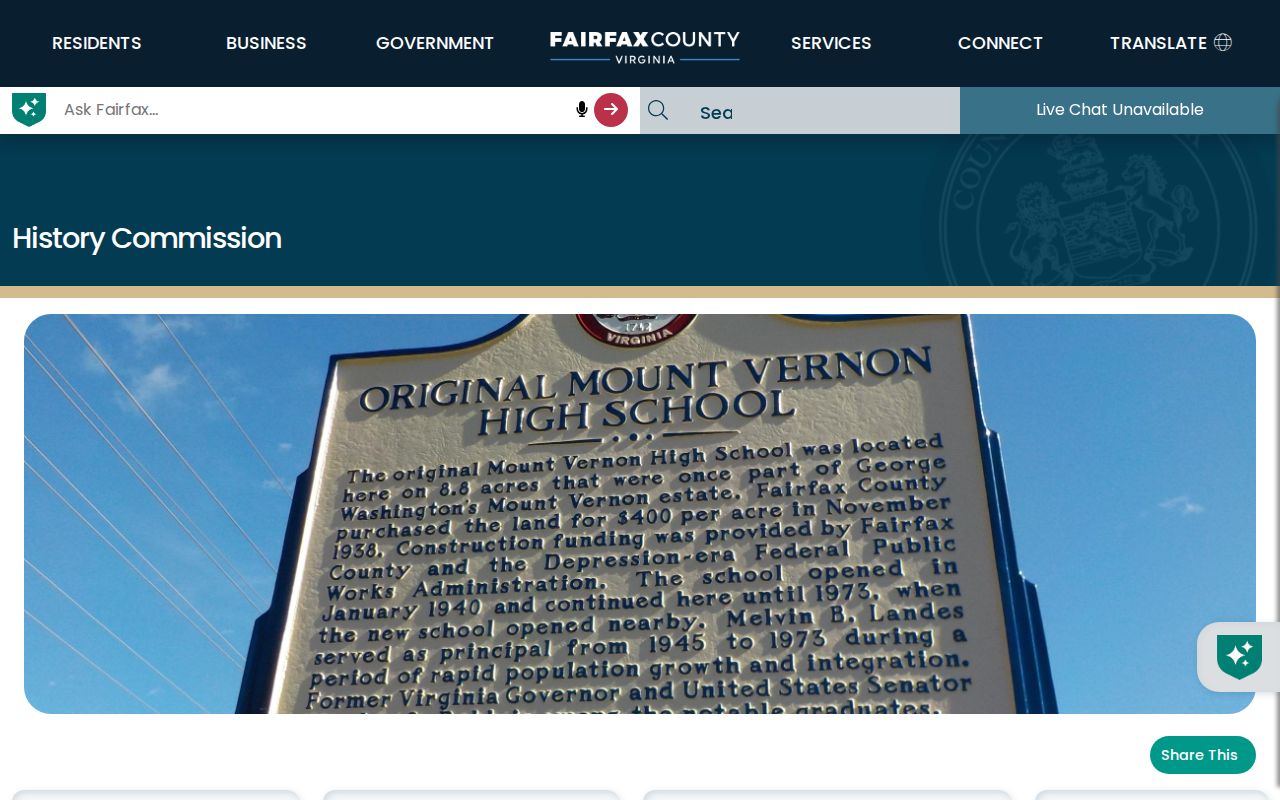
The commission provides a county historical-program entry point, while the Virginia Room remains the identified holder for the directory volumes.
Trace West Springfield City Directories
Household tracing works as a sequence of dated observations. Begin with a known address and a directory year, then write down the entry and source title exactly. Follow the name and address through the next available volume, including the closest street-first or criss-cross alternative. Pair those changes with a deed recording date, newspaper notice, probate material, and released census household. Census access follows the federal 72-year rule, so currently released work uses 1940 and earlier records.
- Find the nearest directory year to the known address or surname and capture its citation before searching another volume.
- Compare the same name and address in the next available title, noting moves, spelling changes, and missing years.
- Reverse the search through a street-first or criss-cross title when the name disappears, if an appropriate run exists.
- Check the recorded deed sequence for a parcel change and preserve the legal-description wording that connects old and new address forms.
- Use the closest released census, obituary, probate notice, or newspaper entry as corroboration, not as a substitute for the printed directory.
A disappearance can mean a move, death, an unlisted telephone number, a selective community volume, or a publication gap. The answer should remain unresolved until two independent source types agree.
West Springfield Directory Companions
The Fairfax Historical Newspaper Index extends a city directory trail with approximately 1.15 million records from ten local newspapers in selected years from 1785 to 2000. Its search accepts an exact keyword from two to 25 characters, a newspaper or source choice, date range, and index type. Results can show subject, date, page, newspaper, and a type code such as obituary or news. Search a surname in the index's last-name-first convention, without a comma, and test spelling variants.
Yearbooks offer another dated companion. Fairfax County Public Schools has scanned more than 300 yearbooks from 36 schools since 2016, while the physical collection is nearly 500 volumes and the photo archive contains more than 13,400 images. Identify a likely school and year, then corroborate the historical clue with a directory or newspaper. Neither resource is a current-person list.
West Springfield Directory Record Gaps
A blank directory search does not prove a person or address was absent. Fairfax's historical holdings include gaps as well as long runs. Land records begin in 1742, but delivery of the index differs by era: CPAN index data is generally 1980 to the present, while older book-image indexes and Historic Records Center books bridge earlier years. The Historic Records Center preserves historic materials, including known missing early deed books and incomplete court series. Record creation, indexing, digitization, and public online search are different events.
Use the fallback chain when a web entry ends: the Virginia Room for printed directories and microform, the Historic Records Center for older county material, the Library of Virginia for Fairfax microfilm and land-tax alternatives, and the Circuit Court for a known instrument or book-and-page request. State the collection and dates searched. That makes a careful gap visible instead of turning it into an invented conclusion.